
What is a successful set-up on Amazon?
For most sellers the planning stops at the first product. The category you pick and the room you leave in it are decided before any campaign runs, and advertising cannot go back and change either.
By Alex Tkach, CEO & Co-Founder, UNITIX Agency
See more UNITIX in Google
Add UNITIX to your Preferred Sources.
Check before you act. Amazon programme rules, fees, and thresholds in this article were last verified on 3 December 2021. Amazon changes them without notice. Confirm current figures in Seller Central.
People come to us with a version of the same question: "What should we do? We have the listing, we have the stock, the product is good, and nothing works. No organic sales, and the organic ranking keeps falling."
Our first question back is always the same. Did you have a strategy at the beginning?
Why single products struggle now
There are fewer solitary operators on Amazon than there used to be. The market has moved into a phase of mergers and acquisitions, and large niches are now occupied by established brands running 60, 80, or 100 SKUs.
This is the era of big brands and long product lines. A single product entering that environment is competing against catalogue depth, not just against another listing.
Launch a line, not a product
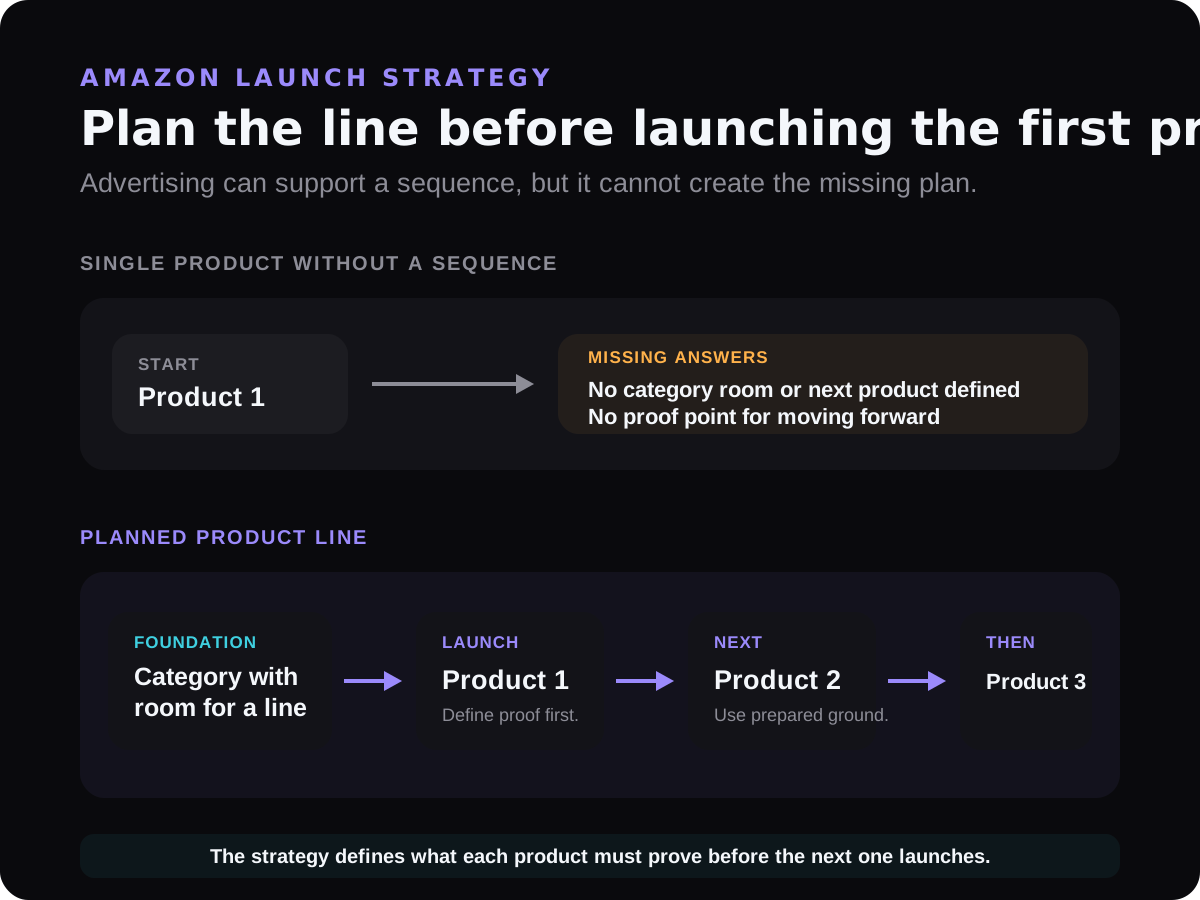
We treat the launch of a product as the launch of a product line.
Even if the budget only covers one product today, plan the brand. Choose a category with enough capacity to hold several products, so that once the first one works you can launch the second and the third into ground you have already prepared.
That sequencing is what separates a launch that compounds from one that stalls at product one.
What the strategy has to answer
Before the first campaign runs, you should be able to say which category you are entering and why it has room, what the second and third products will be, and what the first product needs to prove before the next one launches.
If those answers do not exist, advertising cannot supply them. It can only spend against a plan that was never made.
Two of those answers can be checked before you commit. The Amazon keyword tool shows how much of a phrase's clicks the top three products already take, which is the difference between a category with room and one with owners. The revenue calculator takes the fees off your intended price and says what is left.
Published by UNITIX Agency, an Amazon growth agency and an Amazon Ads Verified Partner. More at unitix.pro/insights.
Check your own product
ASIN Inspector
Paste an ASIN or an Amazon product link. You get the price and Buy Box, rank and how it has moved, ratings, images and video, and the search terms the product is clicked on. Free, and it needs no access to your account.