
What is external traffic for Amazon sellers?
Every competitor in your category is bidding into the same finite auction. External channels reach the buyer before that auction starts, and give the brand room to say things Amazon's format will not allow.
By Serhii Khyshchenko, Team Lead (external traffic), UNITIX Agency
See more UNITIX in Google
Add UNITIX to your Preferred Sources.
Check before you act. Amazon programme rules, fees, and thresholds in this article were last verified on 20 December 2021. Amazon changes them without notice. Confirm current figures in Seller Central.
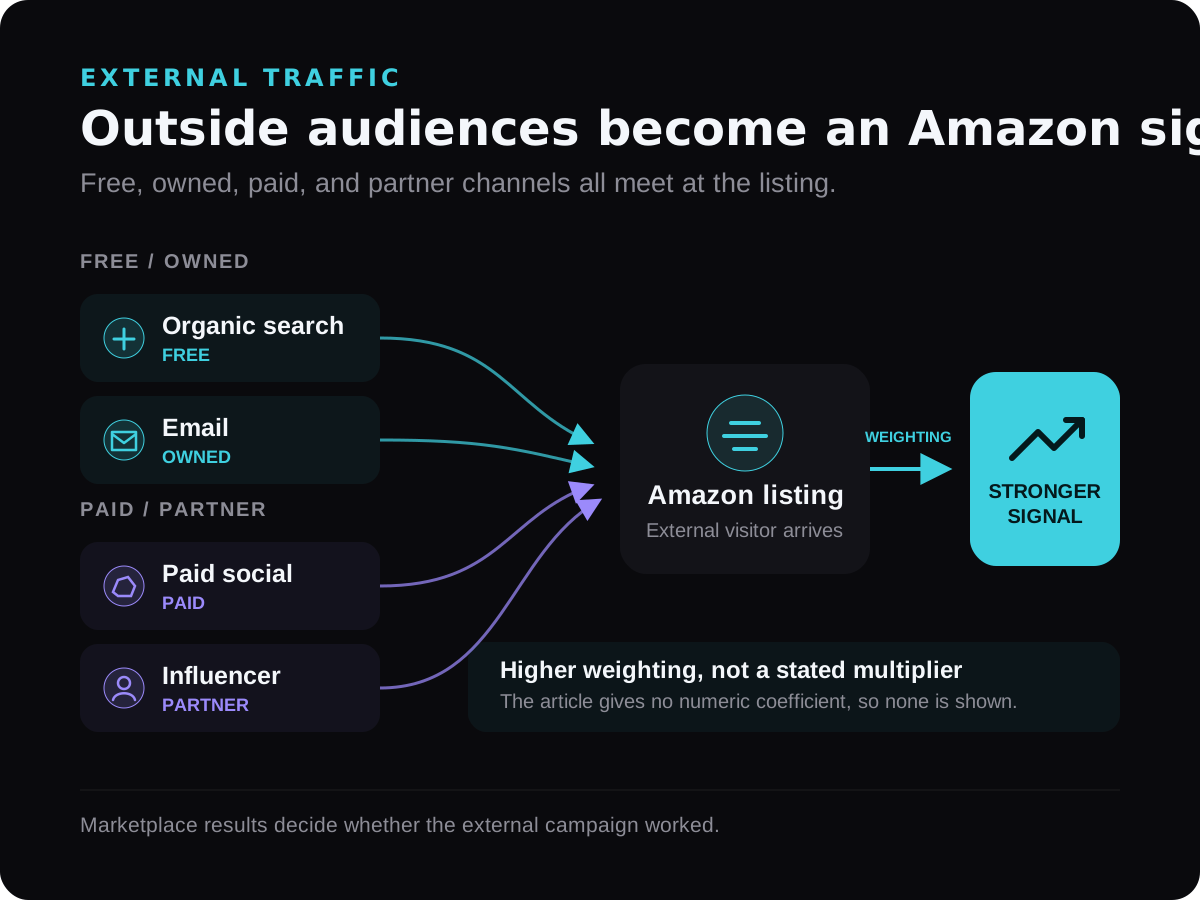
External traffic is any traffic, including visitors, links, audience, and outreach, that reaches your Amazon listing from somewhere other than Amazon itself: organic search, paid advertising, social, email, and so on.
Sources can be free or paid. Traffic from organic search on Google or Bing costs nothing. Paid sources include Google Ads, display advertising, and paid social.
Why it matters more than it looks
The main advantage is not the visitor count. It is that Amazon counts external traffic with a higher coefficient than traffic it supplied itself. That improves ranking, because traffic you brought is a stronger signal than traffic Amazon routed to you.
What it does for you
It gets you past the competition on Amazon. Every seller is running Amazon Ads. Well-configured Amazon advertising works, but you are competing for the same finite inventory as everyone else in your category. Blogs, social, video, and search engines put your product in front of buyers before they enter that auction, bypassing the sponsored placements trying to take your visibility.
It builds a brand Amazon cannot. Amazon is restrictive: strict rules on how a business presents itself, limited room to communicate. External channels let you be creative, speak to your audience directly, and build the recognisable brand that separates your products from the identical-looking alternatives beside them.
How we treat it
External campaigns are judged on marketplace results, not on their own platform metrics. A Google campaign with an excellent click-through rate that produces no Amazon sales has failed, regardless of how it looks inside Google Ads.
Because the same team runs both sides, that judgement happens against one set of targets rather than two agencies each reporting a win.
Published by UNITIX Agency, an Amazon growth agency and an Amazon Ads Verified Partner. More at unitix.pro/insights.
Check your own product
ASIN Inspector
Paste an ASIN or an Amazon product link. You get the price and Buy Box, rank and how it has moved, ratings, images and video, and the search terms the product is clicked on. Free, and it needs no access to your account.