
What return reasons tell you that sales data does not
Every return category points at a different fix. Reading them as one number wastes the most specific feedback Amazon gives you.
By Alex Tkach, CEO & Co-Founder, UNITIX Agency
See more UNITIX in Google
Add UNITIX to your Preferred Sources.
Check before you act. Amazon programme rules, fees, and thresholds in this article were last verified on 19 February 2024. Amazon changes them without notice. Confirm current figures in Seller Central.
Even successful products get returned. In a competitive category, clothing and accessories especially, the returns report is the most specific feedback Amazon hands you, and most sellers read it as a single percentage.
The reasons are not interchangeable. Each category points at a different fix.
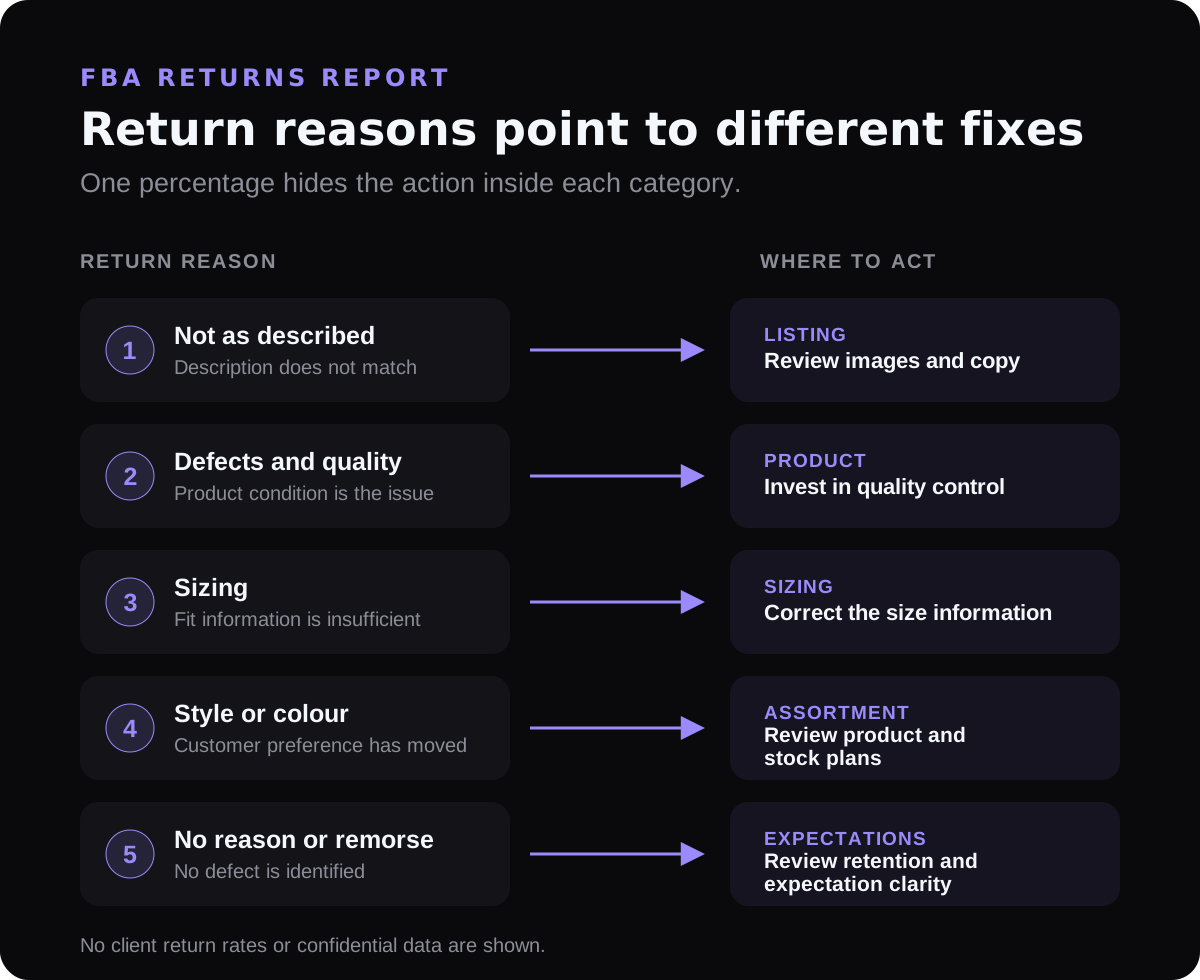
Not as described
A significant share of returns marked "does not match the description" is a listing problem, not a product problem. Review the images and the copy for accuracy and clarity.
This is the cheapest category to fix and the one most often ignored.
Defects and quality
A meaningful percentage of returns for defects or quality indicates that investment in quality control would reduce return rates and build customer trust. This one costs money upstream and saves it downstream.
Sizing
Returns driven by sizing usually mean the sizing information is insufficient, or the size chart no longer matches what customers expect. Both are solvable without touching the product itself.
Style and colour
A high return rate on style or colour suggests customer preference has moved. That belongs in new product development and stocking decisions, not in the listing copy.
Impulse purchases and no reason given
Returns with no stated reason, or that read as buyer's remorse, are worth separating out. They point at expectation-setting and retention rather than at a defect.
Where the data lives
Sellers can download the FBA customer returns report directly in Seller Central.
The analysis matters more than the headline number. A stable return rate that hides a shift from "sizing" to "defective" is a problem getting worse while the percentage stays flat.
Returns show up in the rating before they show up anywhere a seller looks daily. The ASIN inspector plots rating and review count over time, so you can see which month the reasons started changing.
Published by UNITIX Agency, an Amazon growth agency and an Amazon Ads Verified Partner. More at unitix.pro/insights.
Check your own product
ASIN Inspector
Paste an ASIN or an Amazon product link. You get the price and Buy Box, rank and how it has moved, ratings, images and video, and the search terms the product is clicked on. Free, and it needs no access to your account.